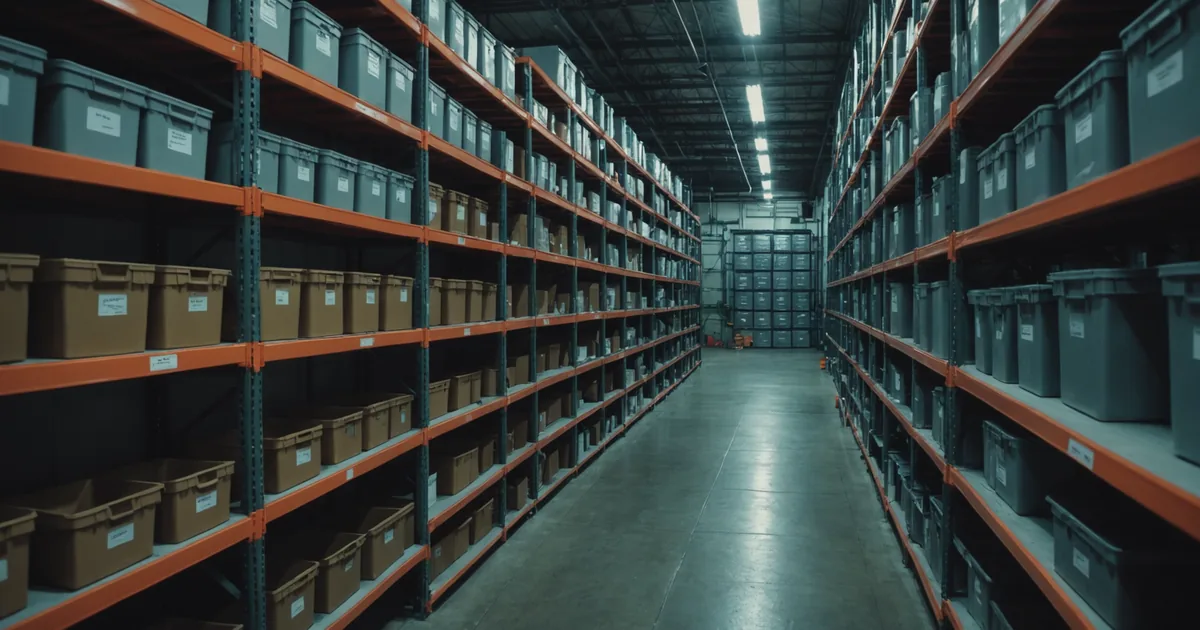
The paradox of the regional MRO overstock problem is that it coexists with regular shortages. The same shop that is sitting on $180,000 of aging inventory it has not touched in 14 months will go AOG next week on a $320 brake torque link pin that it never thought to stock. The shelves are full. The wrong shelves are full.
This is not a story about procurement teams making bad decisions. It is a story about procurement teams making decisions without the information they need, and managing risk by buying more of what they know rather than what they actually need next.
How Overstock Accumulates in Practice
Regional MRO inventory tends to accumulate in layers. The oldest layer is parts that were stocked in response to an AOG event two or three years ago. At the time, the event justified carrying two or three extra units. Since then, the fleet has changed, utilization patterns have shifted, or the component proved to be a one-time failure rather than a recurring pattern. But the safety stock level was never revised downward, so the units sit.
The middle layer is parts that were ordered from a vendor at minimum order quantities that exceed actual demand. An O-ring supplier who requires a minimum order of 50 units is fine for a shop that replaces that O-ring 30 times a year. For a shop that replaces it four times a year, that is more than a decade of stock in one purchase. The unit economics made sense at the time of purchase; the demand reality did not justify the buy quantity.
The top layer is parts purchased for a check package that ran into a scope change. The check was planned for one scope, the actual removal count came in lower, and the unused parts went into stock. If those parts are rotables, they can be tracked back into the serviceable pool. If they are expendables, they sit until consumption catches up, which for low-removal parts can take years.
In aggregate, these three layers represent money that is not available for anything else. For a regional operator with a $1.2M parts inventory and 22% overstock, that is roughly $264,000 in working capital that is doing nothing except aging toward shelf-life limits.
Why Reorder Point Systems Perpetuate the Problem
Most regional MRO shops run reorder point (ROP) inventory management. When stock for a given part number drops to the reorder point, a purchase order is triggered. The reorder point and order quantity are typically set based on historical average demand, average lead time, and a safety-stock multiplier that was last reviewed whenever the system was set up or last touched by someone with enough context to change it.
The problem with ROP systems is not that they are wrong in principle. For stable demand with short lead times, they work reasonably well. The problem is that MRO parts demand is not stable. It is driven by fleet age profiles, utilization cycles, service bulletin compliance requirements, and seasonal maintenance patterns, all of which change over time. A reorder point set on a 24-month rolling average does not distinguish between a part that was frequently removed two years ago and is now rarely removed, and a part that was rarely removed two years ago and is now trending upward.
When the ROP is wrong, it is wrong in both directions. Parts with declining removal rates stay stocked at levels that reflect old demand. Parts with rising removal rates stay stocked at levels that will produce a shortage before the next reorder cycle fires.
The Fleet Change Problem
Regional carriers change fleets more frequently than mainline operators. A carrier that operated a fleet of Bombardier Q400s, then transitioned to ATR 72s, then added two Boeing 737-700s for a wet-lease operation, has parts inventory accumulated across three aircraft types in three different lifecycle stages.
When a fleet transition happens, the parts that were stocked for the outgoing type do not automatically exit the inventory. They stay on the shelf, sometimes for years, while the accounting team debates whether to write them down. Parts that are not type-specific (consumables, common hardware, standard seals) can survive a fleet transition. Type-specific LRUs and airframe components cannot. But they continue to appear in the inventory value, continue to consume shelf space, and continue to distort the picture of what working capital is actually available for current-type demand.
The overstock problem for regional operators is frequently a fleet-transition artifact that was never fully cleaned up, compounded by a ROP system that continues to protect levels set for a fleet that is no longer primary.
What a Demand Signal Changes
The shift from ROP to demand-signal-driven inventory management does not eliminate the need for safety stock. The argument here is not that regional MRO shops should run lean across all parts. The argument is that safety stock should be sized to match the probability distribution of actual demand, not to match the psychological comfort of having once gone AOG on a particular part.
A demand model that is tracking removal rates per flight hour across the fleet, adjusted for the current age profile of each tail, can distinguish between a part that is genuinely at elevated removal risk in the next 60 days and a part that is at low risk but is consuming safety-stock budget because it caused a problem two years ago. That distinction is exactly what a static ROP system cannot make.
For an early-access pilot with a Caribbean-based regional operator running six ATR 42s out of one base, the demand signal review identified 23 part numbers where the current on-hand quantity exceeded the 90-day demand probability by more than 300%. Eleven of those were legacy AOG-response stocks from a period when the fleet was running at higher utilization. Seven were vendor minimum-quantity buys for parts used in check packages that no longer matched the operator's current maintenance program revision. The planners knew some of these existed; they did not have a clean way to quantify the excess against forward demand without the model output.
The Harder Problem: Parts You Are Not Stocking but Should Be
Overstock gets attention because it is visible on the balance sheet. The harder problem is the inverse: parts that should be in stock but are not, because their removal history on the current fleet looks benign while their removal trend across similar fleets is rising.
A regional carrier that has operated a fleet of ATR 72-500s for four years has only four years of removal history on those tails. If a component failure mode tends to emerge in years five and six of operation, the carrier's own data shows no events. They have no basis to stock against the risk. A cross-fleet model that includes removal data from 40 ATR 72 operators across multiple lifecycle stages can surface the trend and allow the carrier to begin building stock position before their own removal events confirm it.
This is the real value of demand signal for regional MRO: not just identifying what is over-stocked, but identifying what is about to be under-stocked before it becomes an AOG event. The overstock problem and the AOG problem are two sides of the same missing-demand-signal issue. Fixing one without addressing the other just moves the pain around.
See Aerotrax on your own fleet data
30-day pilot on your removal history. CSV upload, no integration project required.
Request a pilot